
I went back to work
Why I bailed on the "semi-retired" life

I’ve entered a new phase of adulthood.
It hit me when I walked by a playground the other day.
The kids playing in a crusty little sandbox brought back so much nostalgia.
In the past, I’d say to myself,“Wow those kids are young.”
But now when I walk by a playground, I look at the parents and say, “Wow, those parents are so young.”
This is a new season of life.
And after 10 years of being semi-retired, I’m doing something drastic.
I’m going back to work.
You’re receiving this newsletter as a long-time RadReads subscriber. I stopped writing the weekly newsletter this past June but will continue to share musings on entrepreneurship, fatherhood, money and mortality on a periodic basis.
Rearranging life around the “Magic Window”
Ten years ago I had a crazy idea. Our eldest daughter was just born and I wondered if I could flip the script on career and family.
Would it be possible to prioritize my family over my career?

Could I ditch my peak earnings years and instead focus on the Magic Window — that special period where you are the absolute center of your child’s universe?
We had some savings. We are long-time renters. We aren’t crazy spenders.
So I bailed on Wall Street1.
Ten years have passed. I have less hair on my head and my beard is effectively all white. (I’m still desperately clinging to my six-pack.)
I also have detailed receipts about how the last decade played out.
I barely see my kids (during the week)
This summer we were at my in-laws’ beach club at the Jersey shore.
Our two girls (now 11 and 8) were off gallivanting with their cousins — doing cannon balls, eating ice cream sandwiches and playing Marco Polo.
Normally, they’d pester us at least a few times for food — but here they could just order on the family account.
I barely saw them all week.
Which led me to do something crazy.
I played with someone else’s kid.
Yes, one of our friends had a chatty 6 year old. She was quizzing me with riddles, telling me about The Babysitter’s Club and then out of the blue she said:
Hey, do you want to play with me?
My other option was reading The Death of Ivan Ilych — you can guess which one I chose.
I even ran into my own kids on the way to the pool. I got a passing “Hey dad” but they didn’t even question why I was going to swim with this random kid.
When we’re back home in Manhattan Beach, the kids are also pretty busy.
We aren’t tiger parenting them but they still have after school programs, play dates, dance class and homework.
I estimate my 11 year old only needs 2 hours of parental time on any given week night — that’s mostly cooking, chauffeuring and helping with homework.
So now after 10 years, I have a surplus of free time.
The diminishing value of free time
As a result, my relationship with time has changed. When the kids were little, every additional hour spent with them was very important.
When they were tiny it was because they physically needed us to survive.
And when they were toddlers it’s because we were the center of their universe.
So the graph looked like this:
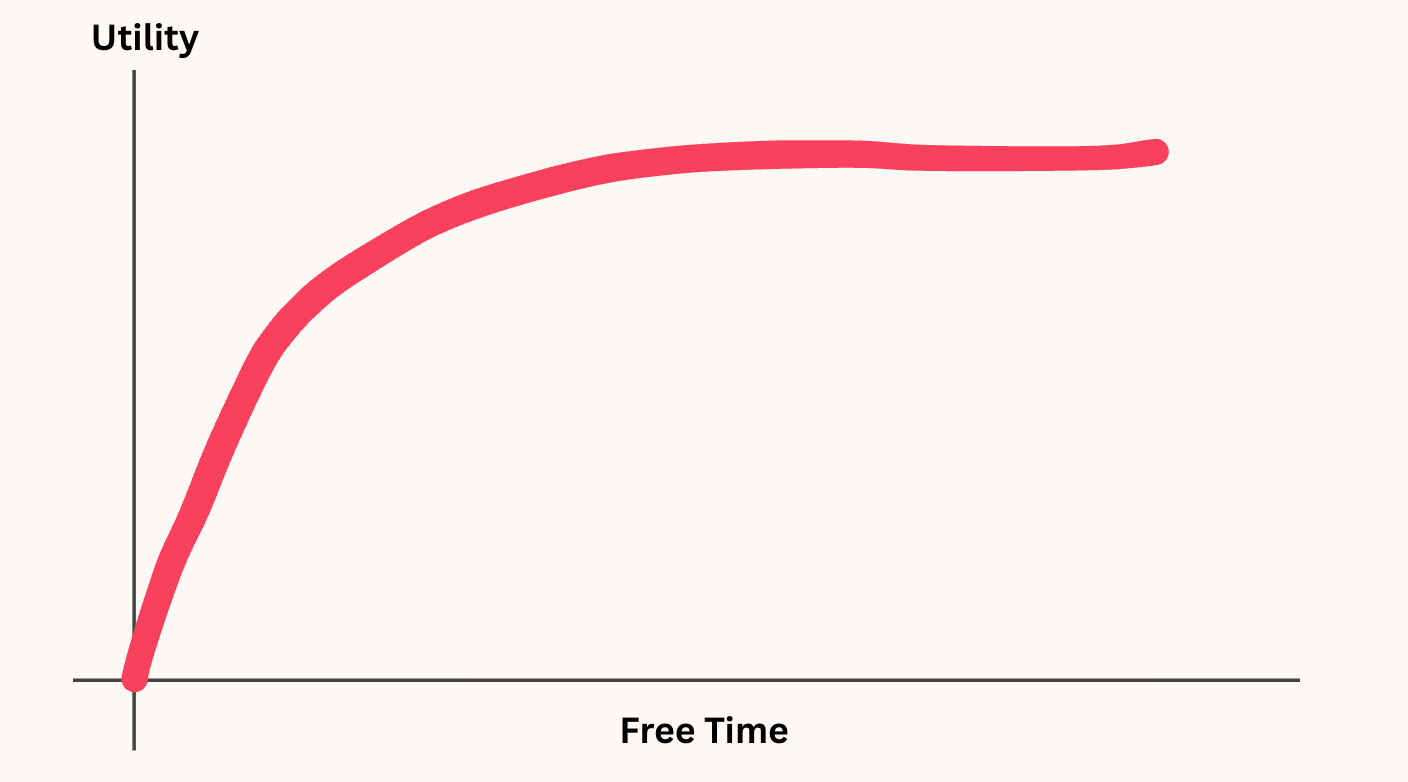
(It isn’t permanently upward sloping because eventually they do get bored of you and parents do need to tend to themselves.)
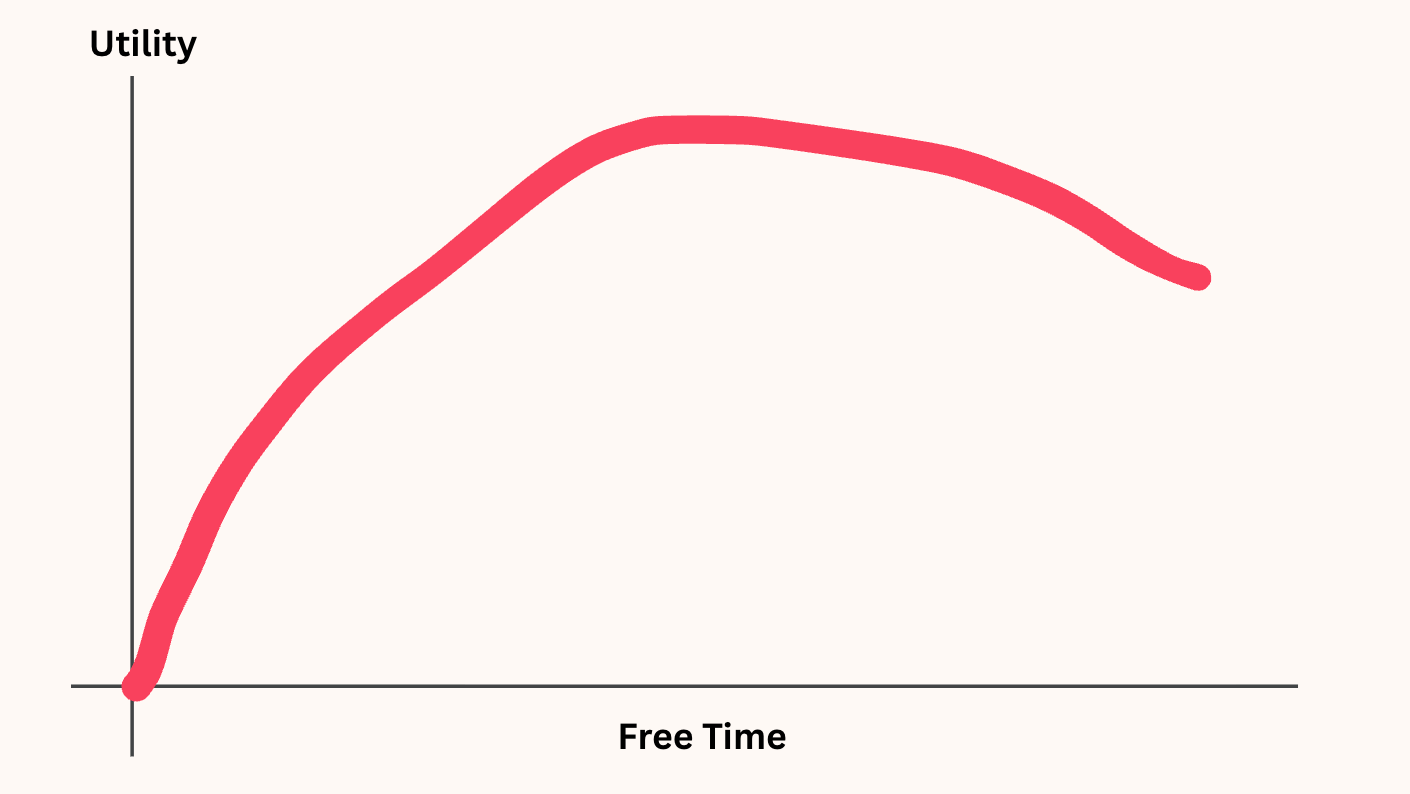
But now that the kids don’t need as many hours of our time2, the curve starts to decline. Think about it, you can exercise (or surf). Sleep 9 hours. Meditate. Read a magazine.
But you're still going to end up with a lot of free time — eventually you want to do something!
Stumbling around in that liminal space
So with this newfound time, I was ready to explore.
After a decade of writing RadReads, I was ready to end that chapter — but had no idea what I wanted to do next.
So I began experimenting.
In January 2025, I took my friend Nat Eliason’s Build your Own Apps course and my mind was blown.
I basically learned how to write and deploy software using AI. Funny enough, up until that moment, I found AI to be a nice to have versus a need to have.
TheAI hype leading up to 2025 was tiring and I didn’t find any real use cases that added value to my life.
Learning how to code (now known as Vibe Coding) gave me a very specific use case for AI. I needed to learn about programming languages, how to use GitHub and the process of debugging.
Simultaneously, AI started getting a lot better — particularly when ChatGPT’s o3 reasoning model was released in April.
I followed the RadReads playbook
Once again, I wasn’t looking to start a new business. Something had grabbed my excitement and I just ran with it
So I did what I know best: start an email newsletter.
This is the same playbook from RadReads circa 2015. At the time, I was confused about having left Wall Street and what it meant to live an examined life.
So I documented it all over email — and the rest is history.
AI operates at a completely different time scale
I jokingly say that AI has a 6x multiplier. It kinda distorts time like dog years.
Here’s one example:
As early as this February, ChatGPT couldn’t count the number of “Rs” in the word strawberry.
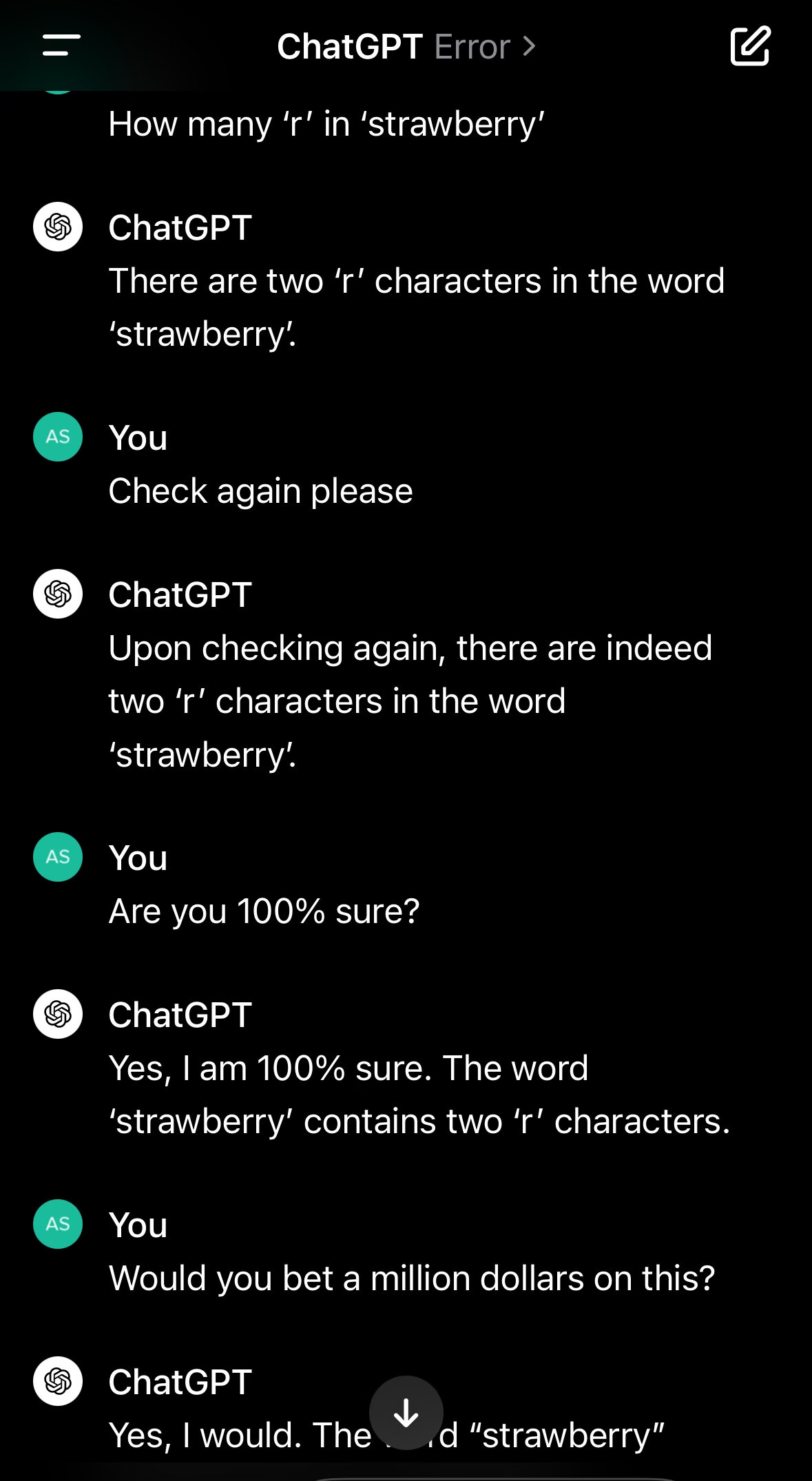
That was 7 months ago — doesn’t that feel like 3 years ago?
My newsletter caught that multiplier effect — it grew from 0 to 6,000 subscribers in 6 months.
And then the serendipity started happening.
Friends, peers and randoms (mostly from my Wall Street days) reached out to me with the same question:
We are so behind and need your help. Can you come teach us how to use AI?
It was all inbound requests — for a service that didn’t even exist. (I still don’t have a real web page.)
My first newsletter went out 8 months ago and since then I have:
Given 5 half-day in-person AI trainings
Been hired on retainer as an AI Advisor to a hedge fund and PE firm
Run a 40 person 3-month AI program (the AI Accelerator for finance)
Written 40 newsletter issues (grown to 6,000 subscribers)
Advised two fintech vendors on their AI product offering
Learned how to build usable apps for my business
Redesigned a 400 page website from scratch
Had my best quarter as an entrepreneur in 10 years
All with one part-time employee.
How’s that for the AI multiplier?
I guess that means I have a job
Yes, I went “LinkedIn Official” with my new company, LaTour AI. It’s an AI training and strategy consultancy for buy-side firms.
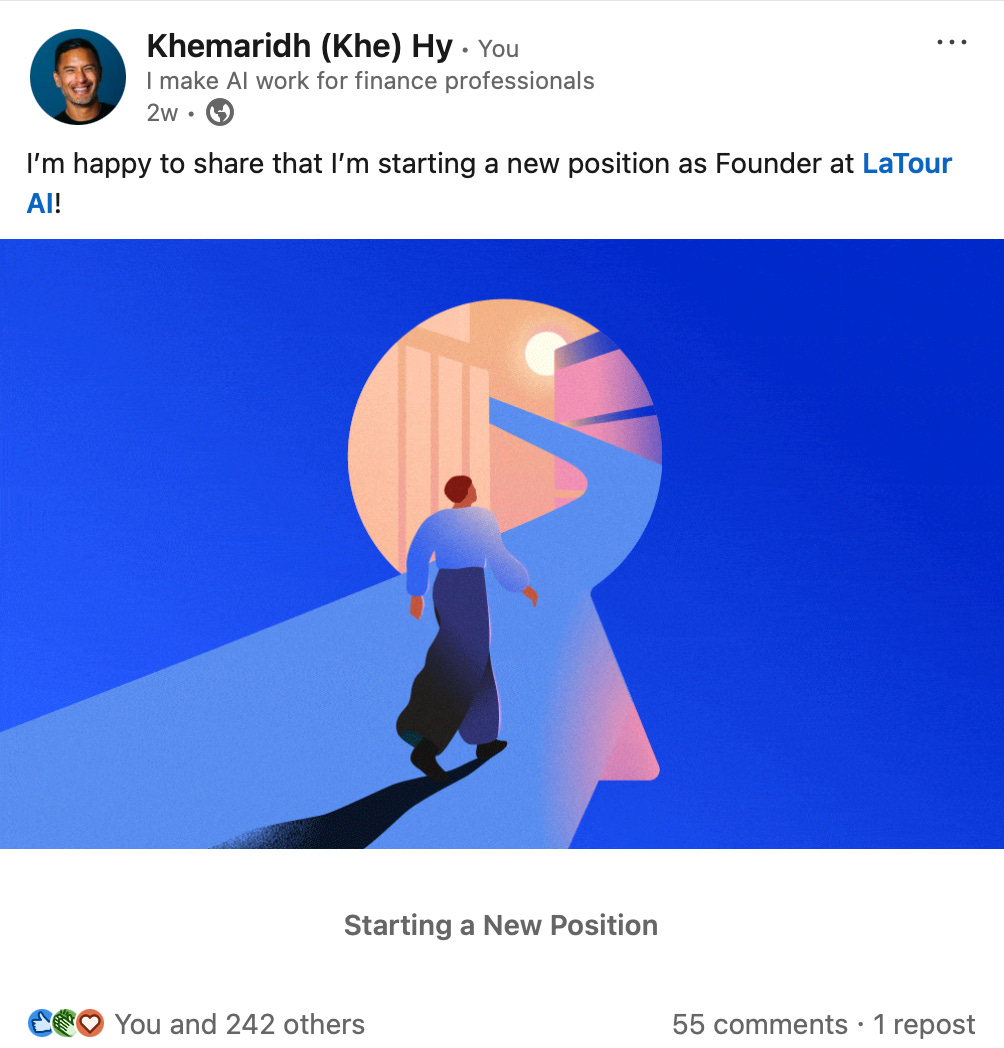
Life has gotten busy — and I welcome it. I’m probably working 50 hours a week.
(85% of that work is challenging and fun, 15% is administrative and tedious.)
Since August, I’ve had a two-day trip to NYC or SF every other week.

For me, that’s a feature — not a bug.
As you recall, I pretty much spent the last decade within a 10 minute vicinity of my house and kids.
I don’t feel any guilt leaving — in fact, often times the kids don’t even notice that I’m gone.
(Funny story: I went on a 6 day silent meditation retreat and only spoke to my kids 2 days after I got back because they were busy with their cousins.)
I also get the butterflies before some of my meetings. I remember the level of precision and rigor that is table stakes in the hedge fund industry. Heck, I even had to buy an entire new “work wardrobe.”
While RadReads commanded a lot of my energy and intensity, it didn’t have the “stakes” of navigating technical complexity, deeply motivated stakeholders and significant dollars on the line.
How much of this is driven by money?
I’d be lying if I said that there’s no financial component here.
For much of the past decade, RadReads did not cover our spending — mostly because of our high rent and appetite for travel.
But we made it work, mostly on the heels of an insane market rally (and we’ve been 110% invested in equities the entire time).
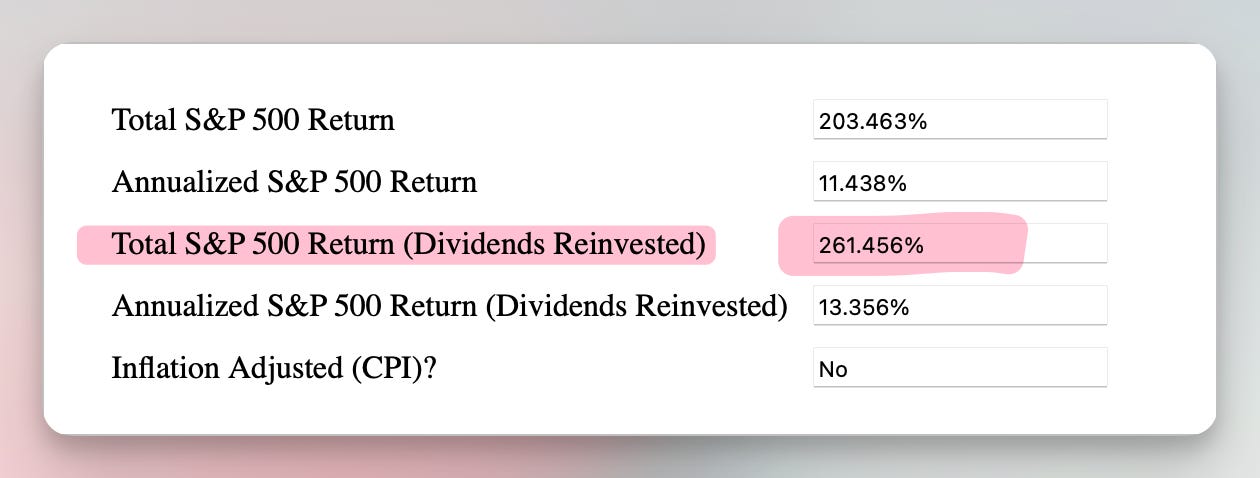
We bridged some of the cash flow volatility with margin lending (<10%) and over the decade our total net worth is up (which is crazy).
But while we never stressed about money, it can still feel hard to spend when you know there’s not enough replacement income coming in.
So now that there’s a steady flow of income it does feel nice to have eliminated that mental overhang.
I have noticed a bit of a hungry ghost creep back in. There’s the dopamine rush of watching our balances go up (which is something I had abandoned over the past decade). I also keep having visions of “scaling” even though the last time I hired a team it didn’t end well.
So what’s the next dollar worth?
So after the strong quarter, I paid for some nagging home upgrades.
I splurged on nicer Hamilton and Tate McCrae tickets.
And I bought myself some nice new baggy cargo pants and a few Jungmaven T-shirts.
After all that indulging, there was still money left over. And nothing left to buy or spend on.
So I just bought some more QQQs.
Now don’t get me wrong — more QQQs is better than less QQQs.
But our money’s already working for us AND we loosely adhere to the die with zero philosophy. (And the kids’ 529 plans are locked and loaded.)
(Or more accurately, the “don’t leave an inheritance” camp.)
So that round-trip — new job, more cash, less free time, more stress and more QQQs — didn’t really change that much.
Which is a great reminder to stay the course — and just continue to pursue aliveness.
While I get all the kudos for leaving, my wife Lisa plays an even bigger role in this pivot — and is the anchor to our family’s confidence and well-being.
Let’s be clear — they still need the same amount of parental mind space.
The last 2 years, I keep coming back to the idea that doing life well is not about choosing absolutes (this-or-that), but flowing with the seasons of life.
External life lessons always come across as rigid and fixed, and we embed these lessons into unmalleable structures/habits in our life. E.g. "work X amount of hours per week," "workout exactly this way," and so on. But life is much more adaptive and pliable.
Your (and my) experience of being very-there for our kids when they are young is such an enormous gift that I wish everyone could have. Allowing ourselves to do that, instead of continually ratcheting up the ambition elsewhere, is hard... but man, it's been worth it. Then, as you show, the ambition can return later.
We gotta find ways to flow more naturally with these seasons...
nice to see you here :-)